In the fast-moving world of enterprise IT, organizations face new demands for compliance, security, and speed. SOA OS23 is emerging as a modern framework that blends the principles of Service-Oriented Architecture (SOA) with new governance practices. It brings structured service design, centralized policy, and real-time oversight. This blog will explain what SOA OS23 means, how it fits into IT governance, and why it matters for industries like finance, healthcare, and government.
What is SOA OS23
SOA OS23 is not just about building services. It is about governing them. It expands traditional SOA into a system where every service has clear ownership, policies, and audit trails. This makes it easier to meet compliance needs while keeping systems flexible. Unlike earlier SOA models, SOA OS23 connects modern APIs, gateways, and cloud-native platforms into one ecosystem. It helps organizations reduce risks and create reliable service networks.
Core Principles of SOA OS23
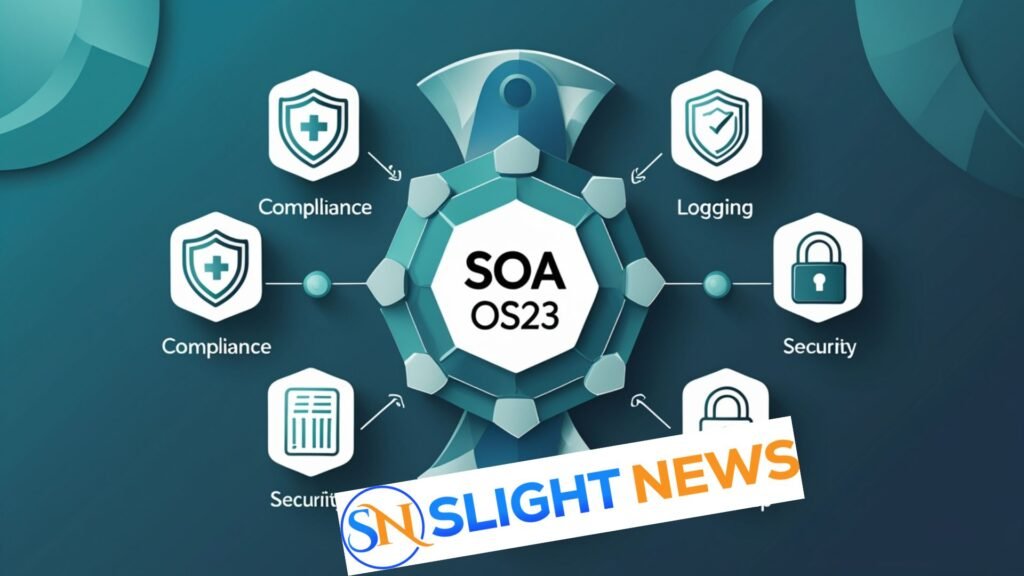
The first principle is clarity of ownership. Every service has a contract, an owner, and defined rules. This avoids shadow systems. The second principle is policy control. Rules for data access, encryption, and usage are not scattered but enforced centrally. The third principle is audit and traceability. Logs, metrics, and access data are captured in real time for review. These principles help businesses handle regulations and protect sensitive data.
Why SOA OS23 Matters for IT Governance
Governance is about making sure systems stay safe, legal, and reliable. SOA OS23 helps organizations by providing one framework for service control. It supports compliance laws like GDPR, HIPAA, and PCI-DSS by enforcing data policies automatically. It lowers operational risks by blocking unsafe service calls and highlighting weak points. For IT teams, it adds structure without slowing innovation. For auditors, it creates proof of compliance in seconds.
Key Components of SOA OS23
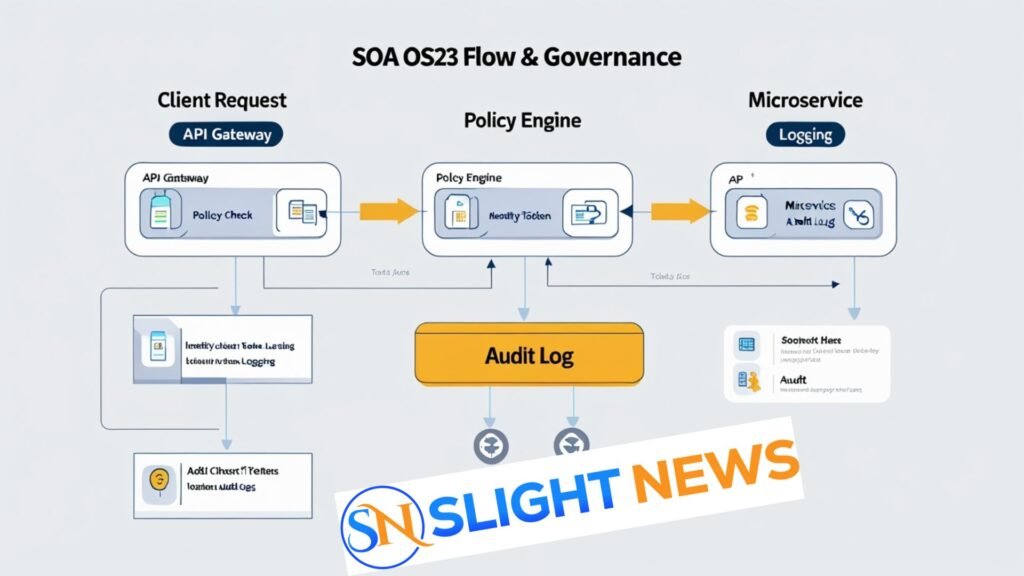
The backbone of SOA OS23 is the service registry, where all services and their contracts are stored. The API gateway controls traffic, enforces security, and manages versioning. The policy engine allows central rules to apply across every service. Finally, the audit log system ensures every request is traceable. Together, these components form a governance layer on top of service design. They bring both flexibility and strong oversight.
How SOA OS23 Improves Compliance
In industries like finance and healthcare, compliance checks often slow down delivery. SOA OS23 solves this by embedding compliance into the platform. Policies such as encryption, role-based access, or data retention are built into the system. For example, a bank running real-time payments can rely on the framework to log every transaction, enforce limits, and restrict data access. This makes audits smoother and reduces human error.
Security Benefits of SOA OS23
SOA OS23 strengthens security by applying the principle of least privilege. Each service only gets the access it needs. API calls carry identity tokens, and unverified requests are blocked at the gateway. Encryption rules apply to both storage and transit. Logs are immutable and can be reviewed at any time. These features lower the chance of breaches and insider misuse. For organizations, this is a powerful shield against growing cyber threats.
Role of SOA OS23 in Digital Transformation
Digital transformation means modernizing old systems, often with cloud-native solutions. SOA OS23 makes this shift easier. Legacy applications can be wrapped as services with policies applied. New microservices can be added to the registry and governed from day one. This allows hybrid systems part old, part new to work together under one governance model. It reduces the risk of transformation projects and keeps operations stable.
Steps to Adopt SOA OS23
Adoption starts with a system audit to list all current services. Next, each service must get a contract with defined inputs, outputs, and rules. Then, a platform with registry, gateway, and policy engine is set up. After that, policies are written as code and tested in deployment pipelines. Organizations often start with a few low-risk services and then expand coverage. Training teams on governance roles is also vital for success.
Metrics That Show Success
To measure progress, SOA OS23 uses clear metrics. These include the percentage of services with defined policies, the number of blocked unsafe requests, and the speed of producing audit logs. Teams also track service uptime, error rates, and compliance readiness. These metrics show whether governance is both effective and efficient. Leaders can use them to report improvements to boards and regulators.
Use Cases Across Industries
In government, SOA OS23 ensures that digital ID, tax, and permit services follow strict audit rules. In banking, it supports real-time APIs with strong authentication. In healthcare, it protects sensitive patient data while enabling data sharing across systems. Even in telecom, it helps manage thousands of services while enforcing fair use and security. These examples show that SOA OS23 can adapt to many fields.
Risks and Challenges
The main risk is shadow services, where teams deploy without registering. This can lead to weak points. The solution is to enforce registry checks and block external traffic outside the gateway. Another challenge is policy drift, where rules differ across services. Central policy repositories and automated checks can fix this. Finally, over-logging can create high costs. Setting smart log levels reduces waste while keeping governance strong.
Difference Between IT and Construction OS23
It is important to note that OS23 has another meaning in Italy, where it is a category for construction demolition works under the SOA tender system. It includes dismantling plants, demolishing buildings, and waste management. This is completely different from the IT use of SOA OS23. Readers should not confuse these two fields. In IT, the focus is governance of services, not demolition projects.
The Future of SOA OS23
As cloud, AI, and automation grow, SOA OS23 will become even more important. Future platforms may add machine learning to detect unusual service calls. They may use blockchain for immutable audit trails. Policy engines may become smarter, adjusting rules based on new risks. Organizations that adopt SOA OS23 today will be better prepared for stricter global regulations and complex multi-cloud systems tomorrow.
Frequently Asked Questions (FAQs)
Q1. What is SOA OS23 in IT governance?
SOA OS23 is a service-oriented framework that ensures compliance, security, and control across digital services.
Q2. How does SOA OS23 improve compliance?
It enforces central policies, automates data rules, and logs every service call for smooth audits and regulatory checks.
Q3. Is SOA OS23 a global IT standard?
No, SOA OS23 is a framework based on SOA principles, widely used in modern IT governance but not a formal ISO standard.
Q4. What industries benefit from SOA OS23?
Finance, healthcare, telecom, and government benefit most due to strict compliance and security needs.
Q5. How can a company adopt SOA OS23?
Start with a system audit, create service contracts, deploy registry and gateways, and roll out policies in stages.
Conclusion
SOA OS23 is more than a technical framework. It is a governance model that makes services secure, compliant, and reliable. By combining registries, gateways, policy engines, and audit logs, it creates a strong foundation for modern IT. Industries from banking to government are already finding value. While challenges like shadow services remain, the benefits far outweigh the risks. For any organization aiming for compliance and agility, SOA OS23 is the next step forward.
For more information Visit: Slight News