

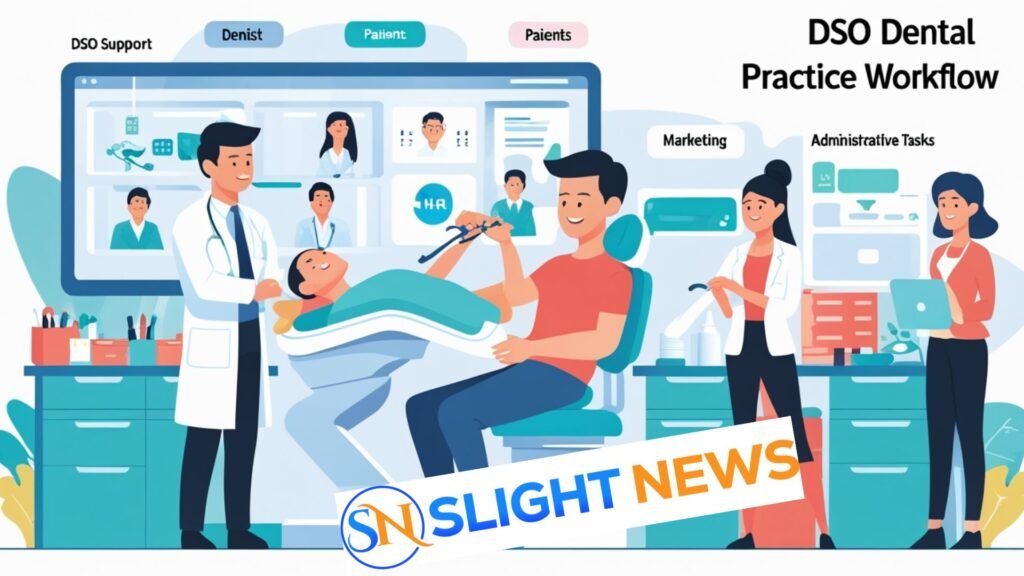
DSO dental practices are changing the way dental care works today. A Dental Support Organization (DSO) does not treat patients directly but helps dental clinics manage the business side of things. These organizations provide services like marketing, accounting, HR, procurement, compliance, and facility management. This allows dentists to focus on patients while leaving non-clinical tasks to experts. Understanding how DSO dental practices operate is key for both dentists and patients.

What Is a DSO Dental Practice?
A DSO dental practice is a partnership between a dental clinic and a Dental Support Organization. The DSO handles business operations so dentists can focus on care. Services may include managing appointments, billing, insurance claims, human resources, and even marketing campaigns. By centralizing these tasks, DSOs increase efficiency and reduce costs. Many DSOs also provide access to the latest dental technology, making treatment more advanced and consistent.
How DSOs Work
DSO dental models can vary. Some DSOs own the practice, while others partner with independent clinics. Through scale, DSOs reduce costs by bulk purchasing supplies and using standardized software systems. They also provide dentists with performance reports, analytics, and growth strategies. This business model is designed to help clinics grow, improve patient care, and streamline administrative tasks without compromising clinical quality.
Types of DSOs
There are several types of DSO dental practices. Some support general dentistry, while others focus on specialties like orthodontics, pediatric dentistry, or oral surgery. DSOs may operate locally, nationally, or internationally. Ownership and decision-making vary; some allow dentists more clinical freedom, while others centralize most decisions. The right type depends on a dentist’s preference for autonomy and support.
Benefits for Dentists
One of the main advantages of DSO dental practices is reduced administrative burden. Dentists can spend more time treating patients instead of managing business tasks. DSOs also provide professional development, ongoing training, and mentorship, helping dentists grow their careers. Access to advanced technology, group purchasing power, and opportunities for equity or ownership are other benefits that make DSOs attractive to many dental professionals.
Benefits for Patients
Patients also gain from DSO dental practices. Standardized systems and technology improve care quality. Flexible scheduling, including evenings and weekends, makes dental services more accessible. Economies of scale allow DSOs to accept more insurance plans and offer competitive pricing. Data-driven care and performance tracking often result in higher patient satisfaction and better treatment outcomes.
Challenges of DSO Dental Practices
While DSO dental practices offer many advantages, challenges exist. Dentists may feel a loss of autonomy or pressure to prioritize revenue. Standardized reporting systems can create bureaucracy, and cultural mismatches may affect staff morale. Regulatory scrutiny is also growing, as authorities monitor corporate influence in dental care. Despite these challenges, many dentists find DSOs a valuable way to balance professional growth and patient care.
Market Trends and Growth
The DSO dental market is growing rapidly. Investor interest, private equity funding, and technology adoption drive this expansion. Many DSOs are integrating tele-dentistry, AI diagnostics, and patient engagement platforms. Value-based care models are emerging, emphasizing outcomes and patient satisfaction over volume. DSOs also help expand access to dental care in underserved areas, leveraging their scale and efficiency.
Examples of Major DSOs
Some of the largest DSO dental networks include Pacific Dental Services (PDS) and Aspen Dental. PDS manages many clinics across the U.S., providing support services that allow dentists to focus on clinical work. Aspen Dental operates a nationwide network, known for its professional approach and patient-friendly services. These organizations highlight the impact and reach of DSOs in modern dentistry.
Ethical Considerations and Regulation
Ethics and regulation are critical in DSO dental practices. The Association of Dental Support Organizations (ADSO) sets standards for ethical operations. DSOs must maintain transparency, uphold patient rights, and ensure clinical independence. Regulatory scrutiny is increasing, particularly regarding corporate ownership of dental practices and the balance between profit and patient care.
Choosing a DSO Dental Practice
For dentists, joining a DSO dental practice can provide career growth, work-life balance, and access to advanced tools. Patients should understand that while DSOs manage the business, licensed dentists make all clinical decisions. Evaluating a DSO’s reputation, financial stability, and alignment with personal values is crucial before partnership or affiliation.
The Future of DSO Dental Practices
The future of DSO dental practices looks promising. Expansion continues, with technology, tele-dentistry, and data-driven care shaping the industry. Regulations will tighten, ensuring ethical operations and patient protection. DSOs may play a bigger role in underserved areas, improving access to dental care through efficient, scalable business models.
Frequently Asked Questions
- What is a DSO dental practice?
A DSO dental practice is a clinic supported by a Dental Support Organization that handles business tasks so dentists can focus on patient care. - How do DSOs help dentists?
DSOs provide services like HR, accounting, marketing, procurement, and tech support, reducing administrative work for dentists. - Are patients affected by DSOs?
Yes, patients get better scheduling, access to modern dental technology, and sometimes more affordable care due to economies of scale. - What are the risks of joining a DSO dental practice?
Dentists may face reduced autonomy, corporate policies, or bureaucratic processes, so evaluating the DSO carefully is important. - Which are the top DSOs in the U.S.?
Pacific Dental Services (PDS) and Aspen Dental are two of the largest, known for professional management and nationwide clinic networks.
Conclusion
DSO dental practices are transforming dental care by separating clinical work from business management. Dentists benefit from reduced administrative tasks, professional growth, and advanced tools. Patients gain access to consistent, high-quality care with flexible options. While challenges exist, understanding how DSO dental practices work helps both dentists and patients make informed decisions in today’s evolving dental landscape.
For more information Visit: Slight News