

If you land on a strange address like 185.63.263.20, you might think it’s a standard IP. That’s what this guide is for to help you fully understand what 185.63.263.20 means, why it fails as a valid address, and what to do when you encounter it. By the end, you’ll know how to interpret such anomalies and handle them properly.
What is 185.63.263.20?
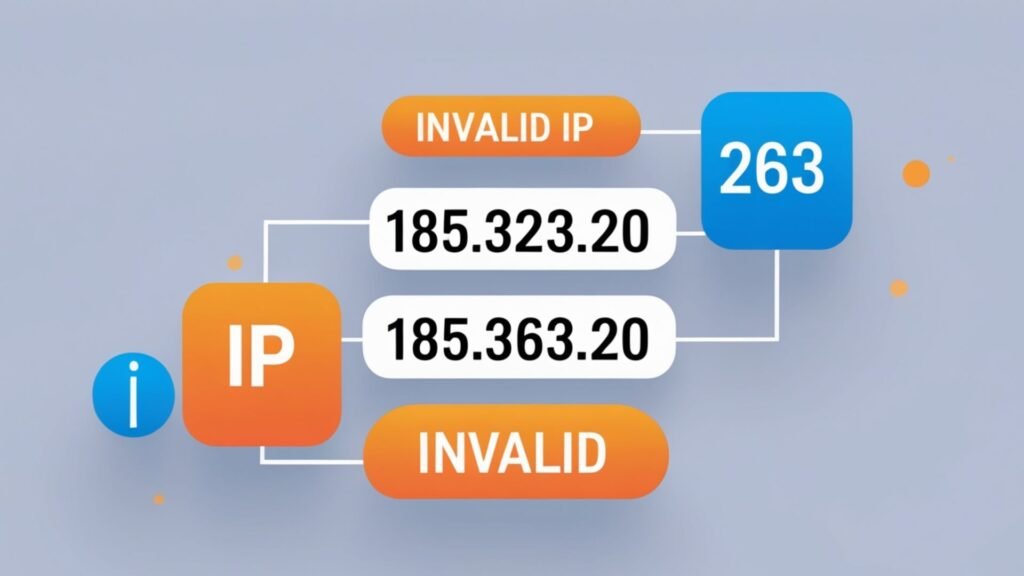
185.63.263.20 looks like a typical IPv4 address four numbers separated by dots. But in reality, it fails a fundamental rule: each “octet” must range from 0 to 255. Having “263” in the third segment breaks that rule. That simple mistake turns a normal‑looking string into a non‑existent address.
Why 185.63.263.20 Shows No Valid Information
When you run a geolocation or WHOIS lookup on 185.63.263.20, you’ll get no valid information. That’s because the address doesn’t belong to anyone. It can’t be assigned, routed, or recognized by the global registry managed by IANA. So any lookup tools will come up empty or show error.
Common Causes of Malformed IPs
Sometimes 185.63.263.20 or similar malformed addresses appear in logs. This usually happens because of human typos, like mistyping “253” as “263,” or due to faulty automated scripts. When a script mishandles IP generation or manipulation, it might push out invalid addresses like this by accident.
Use of Fake IPs in Security and Testing
In other cases, 185.63.263.20 might show up because someone intentionally uses fake addresses. For example, attackers or bots may spoof random IPs to clutter logs, hide their real origin, or evade detection. Since the address is invalid, it cannot be traced, giving a false sense of anonymity.
Security Implications of 185.63.263.20
If your firewall, intrusion detection system (IDS), or analytics dashboard logs 185.63.263.20, treat it with suspicion. Its very presence indicates something amiss: misconfiguration, sloppy script, or malicious activity.
Actions for Network Administrators
For network administrators, seeing 185.63.263.20 repeatedly should trigger deeper review. Check the code that logs IPs, review firewall rules, and verify whether any expected traffic might be failing because of incorrect IP parsing.
Importance of IP Validation
When designing any system that logs or tracks IP addresses, enforce strong validation. A simple check verifying each octet is between 0 and 255 catches invalid entries like 185.63.263.20 before they pollute logs or disrupt analytics.
Using Reserved IPs for Testing
Better yet, for testing or placeholder purposes, use IPs from designated reserved ranges (like RFC‑1918 addresses). These are reserved for private or local networks and prevent accidental use of invalid public addresses.
Comparison With Valid IPs
Compare a valid IP like “185.63.253.20” to 185.63.263.20. The valid one resolves to a real host; the invalid one vanishes in lookup tools. That contrast highlights why validation matters.
Reducing Log Noise
If your team maintains log‑analysis rules or IDS triggers, whitelist or drop obviously malformed entries such as 185.63.263.20. This reduces noise and helps focus on real threats or valid traffic.
Avoiding Fake IPs in Documentation
Avoid using 185.63.263.20 in documentation, example configs, or tutorials. Instead, choose clearly invalid test addresses or reserved ranges. That way, readers won’t be confused by addresses that cannot exist.
Repeated Occurrences and Investigation
Consistently encountering 185.63.263.20 in logs may indicate deeper problems. Perhaps a bot is scanning aggressively with malformed addresses, or a script has a bug producing invalid IPs. Either way, investigate to ensure system stability and security.
Lessons from 185.63.263.20
Understanding 185.63.263.20 also reinforces a broader lesson: address hygiene matters. Valid IP addresses ensure reliable routing, accurate logging, and meaningful traffic analysis. Malformed ones break workflows and complicate debugging.
Bottom Line on 185.63.263.20
In summary, 185.63.263.20 is not just a typo it’s a signal. It tells you something is wrong: invalid data, misconfigured tools, or possibly malicious afoot. Recognizing and filtering it preserves clarity.
Best Practices for Networks
If you ever come across 185.63.263.20, don’t panic. Instead, treat it as a red flag, not a real endpoint. Cross‑check your logs, validate your data, and ensure no systems rely on faulty addresses.
Frequently Asked Questions
- What is 185.63.263.20?
185.63.263.20 is an invalid IPv4 address because one segment exceeds 255. It cannot be used or traced. - Can 185.63.263.20 be located online?
No. Lookup tools cannot find 185.63.263.20 since it is not a real, routable IP address. - Why does 185.63.263.20 appear in logs?
It may appear due to typos, misconfigured scripts, bots, or malicious IP spoofing attempts. - How can I protect my system from invalid IPs like 185.63.263.20?
Implement IP validation, filter malformed entries, and use reserved IPs for testing. - Is 185.63.263.20 dangerous?
It’s not a real IP, but repeated appearances can signal misconfigured systems or malicious scanning.
Conclusion
To keep networks clean and secure: implement IP‑validation checks, avoid using fake IPs in examples, and monitor logs for repeated invalid entries. This protects your infrastructure and helps maintain trust in your data.
Armed with the knowledge of 185.63.263.20, you’re now equipped to spot anomalies, clean up log noise, and maintain effective network hygiene. Use this guide whenever you need clarity and keep your systems sharp.
For more information Visit: Slight News